




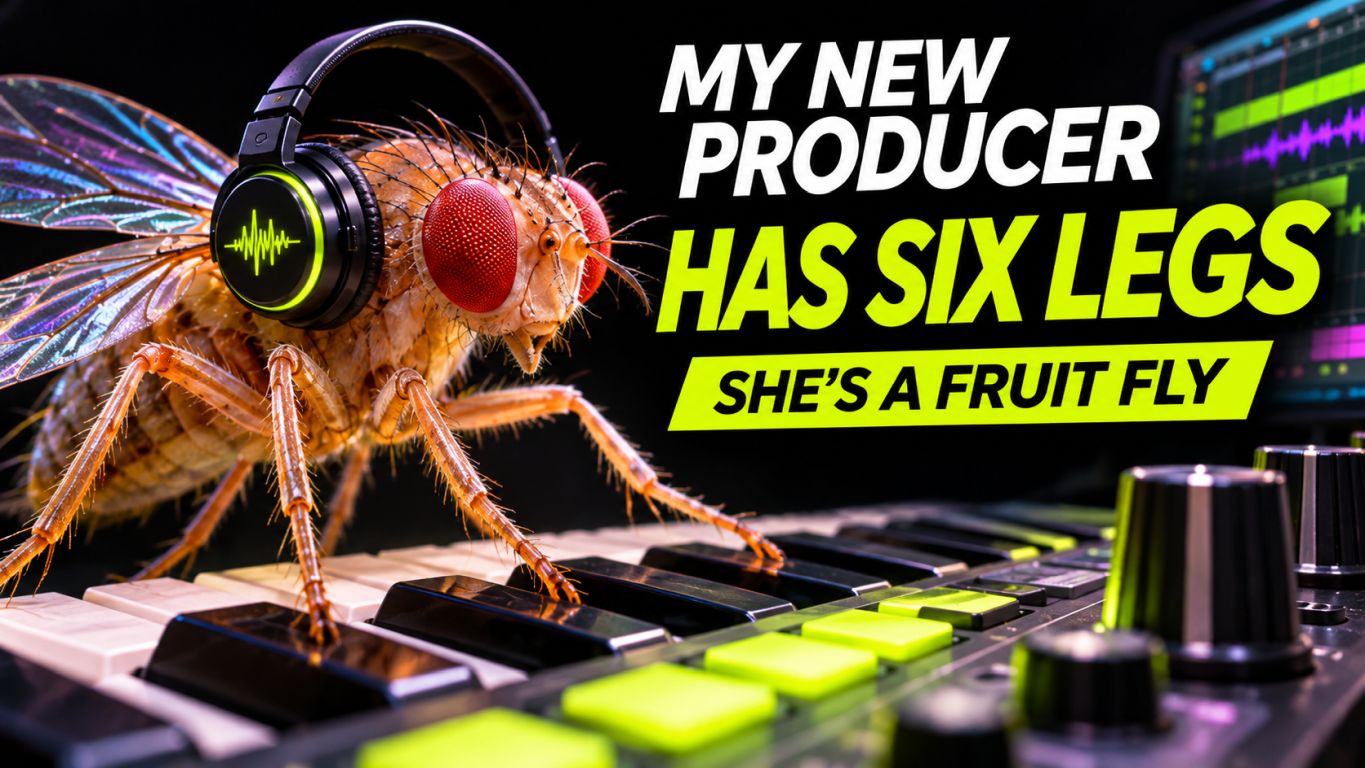
I've been making music with a new partner. And this one is a little unusual.
It doesn't ask for royalties. It doesn't complain about the drums. And it has six legs.
Yes. My new music partner is a fruit fly.
We made four pieces of music together. Some parts surprised me. Some sounded as though the drums and bass had stopped speaking to each other. But a few made me hit replay.
You're probably wondering how a fly could possibly help write a song. Fair question. Before I explain, listen to what we made.
Hear the evidence
Pick a sample and press play. The instruments are simple on purpose. This experiment is about the music (the melodies, beats, and little surprises), not expensive studio sound.
Would you have guessed that a fruit fly was involved? Now for the part I've been keeping quiet.
No, I didn't buy tiny headphones
Imagine a fly at a miniature keyboard, nodding along to the beat. Great picture. Unfortunately, the headphones alone would be a nightmare to find.
My partner wasn't sitting in a studio. I worked with a digital map of connections inside a fruit fly's brain.
Scientists working on a project called FlyWire have mapped how brain cells connect. Think of a city map: countless roads, junctions, and possible routes. Now replace the roads with connections between neurons.
From that map, I used a network of 8,192 neurons in my own program. It's reconstructed brain wiring, not a living fly trapped in a laptop. Nobody needs to call insect rescue.
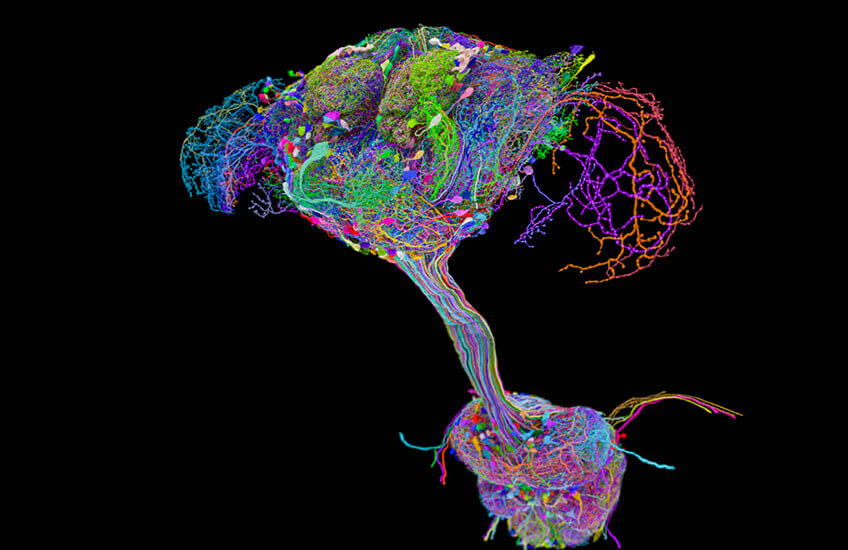
But here's the interesting question: what can brain connections actually do for a song?
An unusual way to write a track
When activity moves through the simulated fly-brain network, it follows those mapped connections. The patterns influence the musical possibilities my program tries: where a melody might go, how a rhythm might develop, or which idea gets explored next.
Then the rest of the system joins in. It builds melodies, chords, bass lines, and drum patterns. It compares different versions, keeps promising ideas, and changes them again. Imagine making a song with a friend who keeps saying, "What if we tried this instead?"
Some suggestions work. Others really don't. That's part of making music, whether your collaborator has two legs or six.
And there was another puzzle. A fruit fly has never taken a piano lesson. So where would the musical knowledge come from?
Giving the collaboration a sense of music
I gave the software examples of real piano playing and human drumming, plus reference tracks for different genres. They helped it understand things like rhythm, melody, and what makes a style recognizable.
House music was particularly entertaining. Some early attempts sounded less like a dance floor and more like a hotel lobby. Nothing wrong with hotel lobbies. But that wasn't the assignment.
With better guidance, the program could aim for stronger beats, more convincing bass lines, and changes that made the track feel like it was going somewhere.
The week my computer became a bandmate
I called the project FlyWire Composer. Building it took a full week, more than 7,000 lines of Python, and hundreds of tests.
It starts by arranging notes and rhythms, then turns those musical instructions into sound. So you're hearing the results of a custom music-making system, not a prompt typed into an ordinary AI song generator.
Some tests were fun. Others were a strong argument for having a stop button. I kept experimenting because I wanted to know whether this strange partnership could produce something worth hearing.
So who really made the music?
We did, together, in a very unusual way.
The fly's reconstructed brain wiring is an active contributor. Its simulated activity influences which musical possibilities get explored. My software, musical examples, and decisions help turn those possibilities into actual tracks.
That doesn't mean a living fly understands a chorus or has strong opinions about the bass. It means a real map of biological connections has a working role in the creative process. How much it contributes compared with a version without that network would take more testing to measure.
Listen again, knowing what's behind the notes. A tiny insect's brain wiring helped shape music made with thousands of lines of code. That's a collaboration I never expected to put on my résumé.
A tiny fly. Four tracks. One very strange musical partnership.
Curious about exactly how I built it? Read the deeper behind-the-scenes story: I Made a Fruit Fly Brain Compose Music. Here's What Happened.